.webp)
The modern office has long been more than just a place where we spend our working hours. In an era of artificial intelligence, constant information flows and growing demands on our concentration, its role is changing fundamentally. In its A New Mindset research, Steelcase presents a new approach to workplace design that puts our most valuable asset at the centre: the human brain.
From office attendance to quality of thinking
For many years, productivity was associated primarily with time spent at work. Today, however, the ability to concentrate, think creatively, collaborate and solve complex problems matters more and more.
Steelcase describes this shift as a transition from the Attendance Era (the era of presence) to the Attention Era (the era of attention).
While technology and artificial intelligence can automate many routine tasks, human creativity, critical thinking and the ability to make new connections remain irreplaceable. The workplace should therefore actively support these abilities, rather than restrict them.
Attention as our most valuable resource at work
Constant notifications, noise, colleagues moving around and visual stimuli place a considerable strain on our brains. Research shows how significantly our ability to sustain attention has changed in recent decades. The figures below show just how scarce a resource our attention is becoming. This is precisely why good workplace design is increasingly important.
Average time spent focusing on a screen in 2004, according to research by Dr. Gloria Mark of the University of California, Irvine.
2.5 minutes
Average time spent focusing on a screen in more recent measurements cited by Steelcase.
47 seconds
Approximate decrease in average attention span between these measurements.
69 %
An office that helps us think
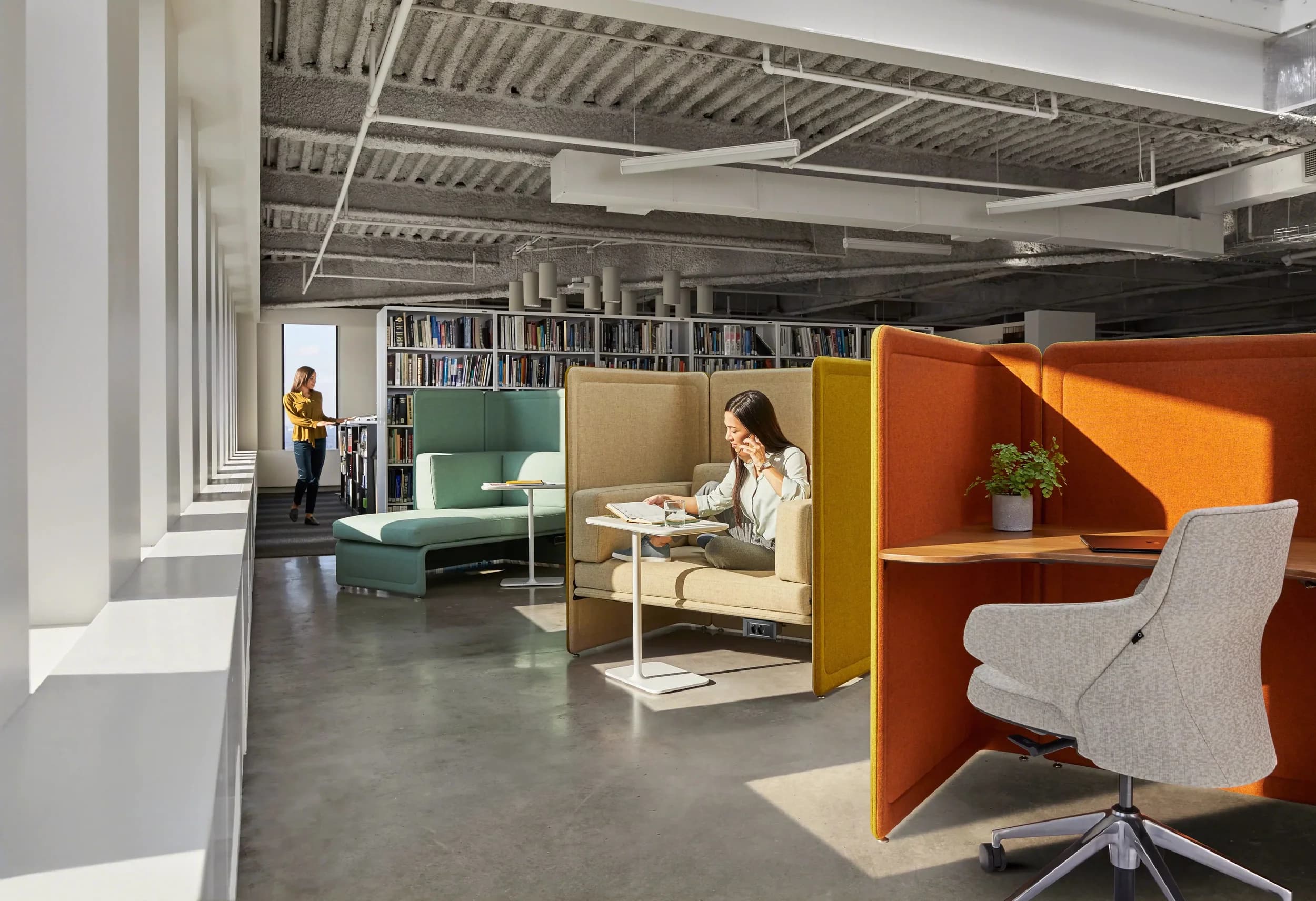
Steelcase research conducted in collaboration with the Center for Healthy Minds at the University of Wisconsin–Madison showed that even relatively simple changes to a workstation can significantly affect the ability to concentrate.
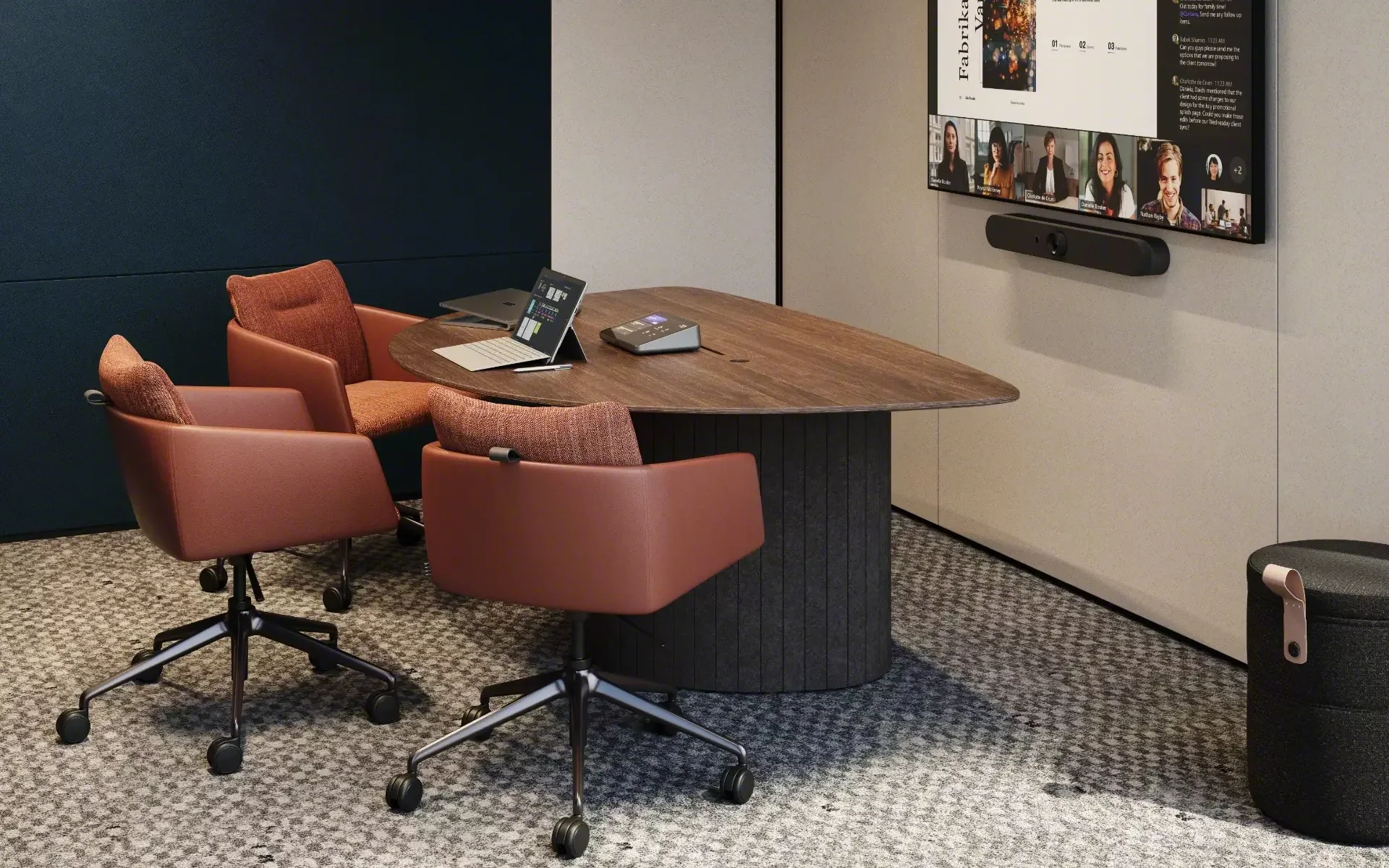
Participants working at partially screened workstations performed better on tasks requiring sustained attention and made fewer errors than those in an open space. This was despite ambient noise levels being the same in both environments.
Visual privacy can therefore be just as important for effective concentration as acoustic comfort.
The future of offices starts with people
The findings of the Steelcase research carry an important message for architects, designers and employers themselves. A good office is defined not simply by the number of workstations or efficient use of space, but above all by how well it supports the people who use it.
The future of the workplace lies in creating spaces that not only enable us to work, but help us think, create and collaborate better.
We believe that thoughtful workplace design has a fundamental impact on the day-to-day experience of work. In collaboration with Steelcase, we help create offices that respond to employees’ current needs and support new ways of working.