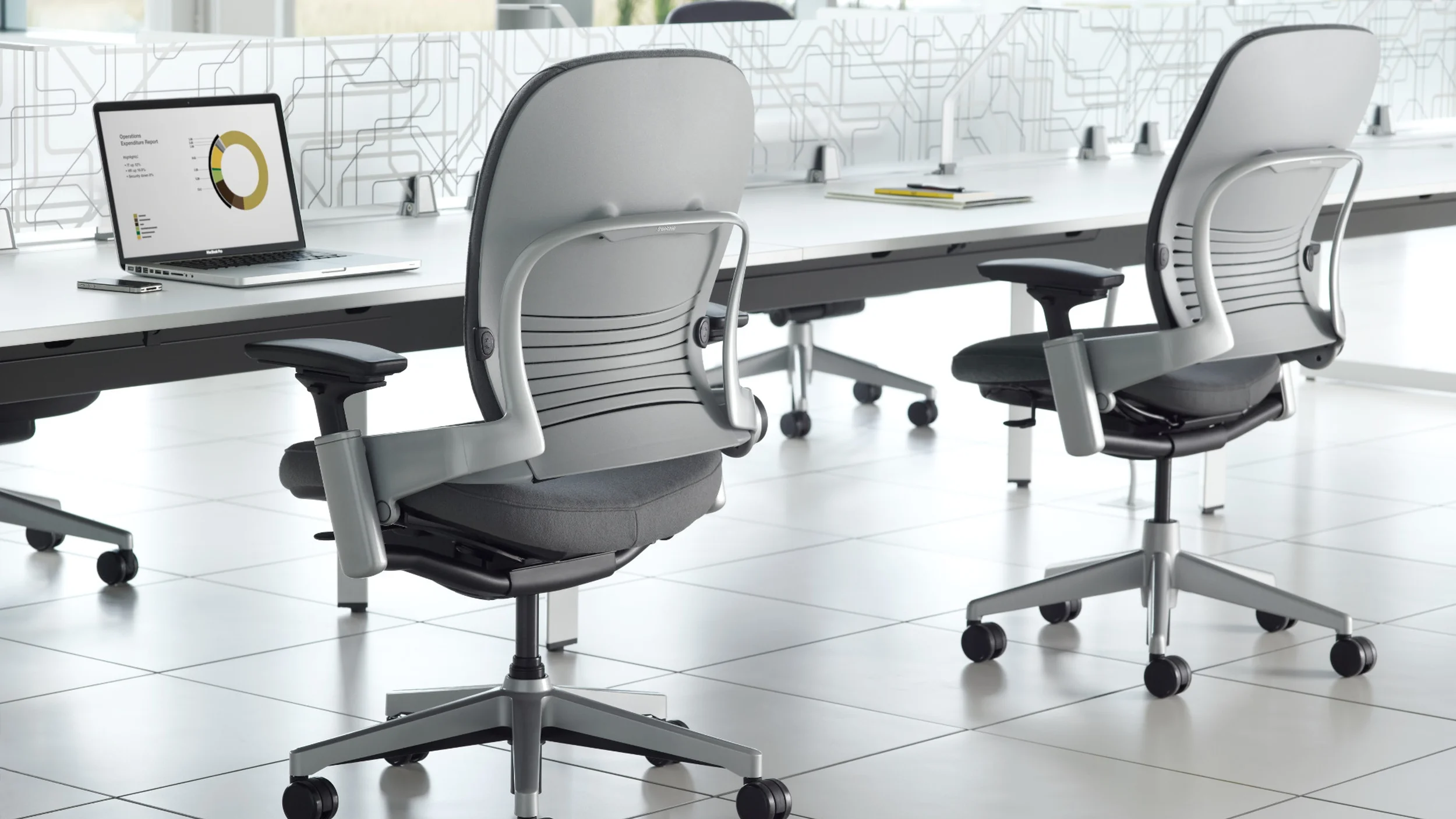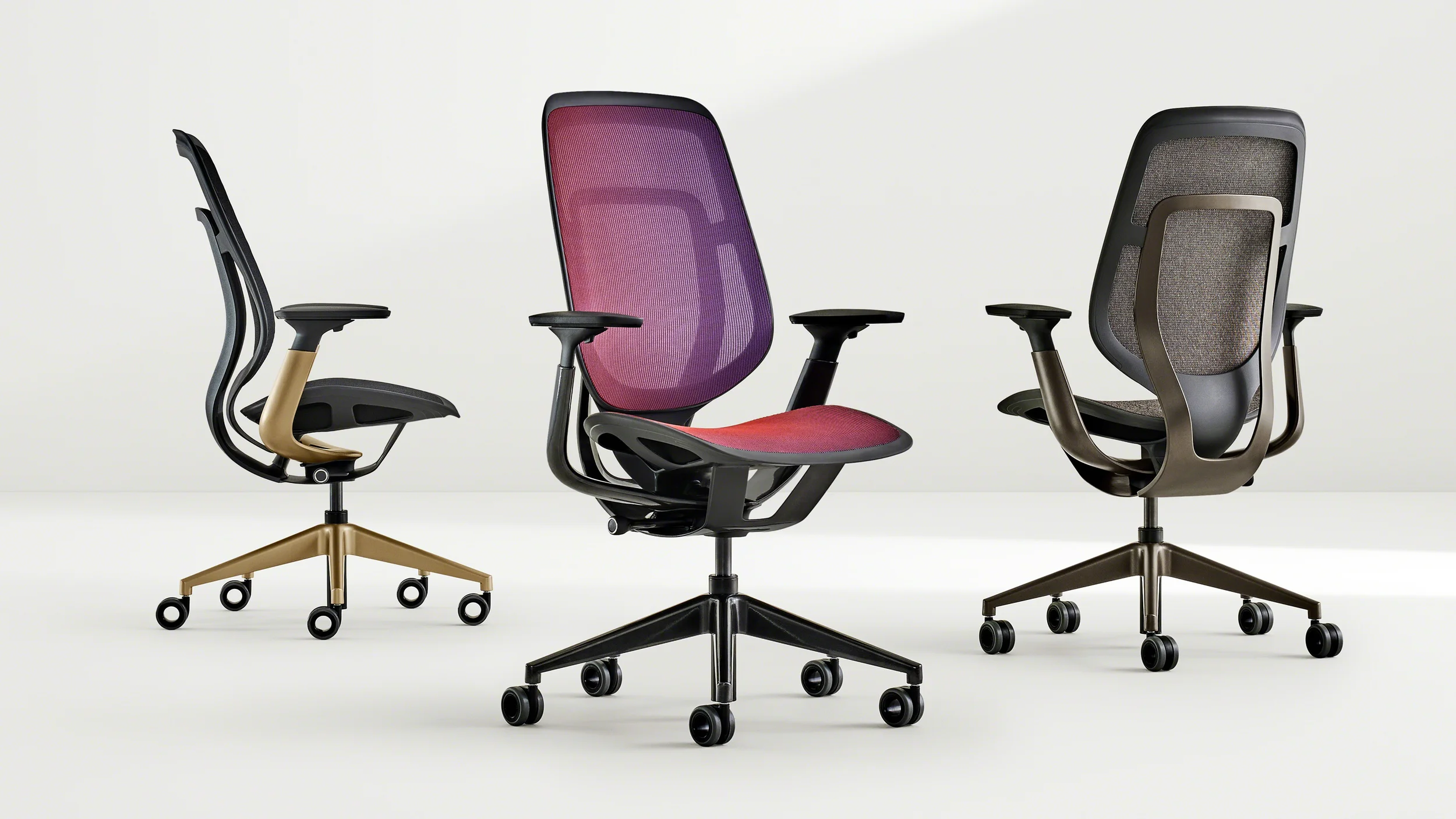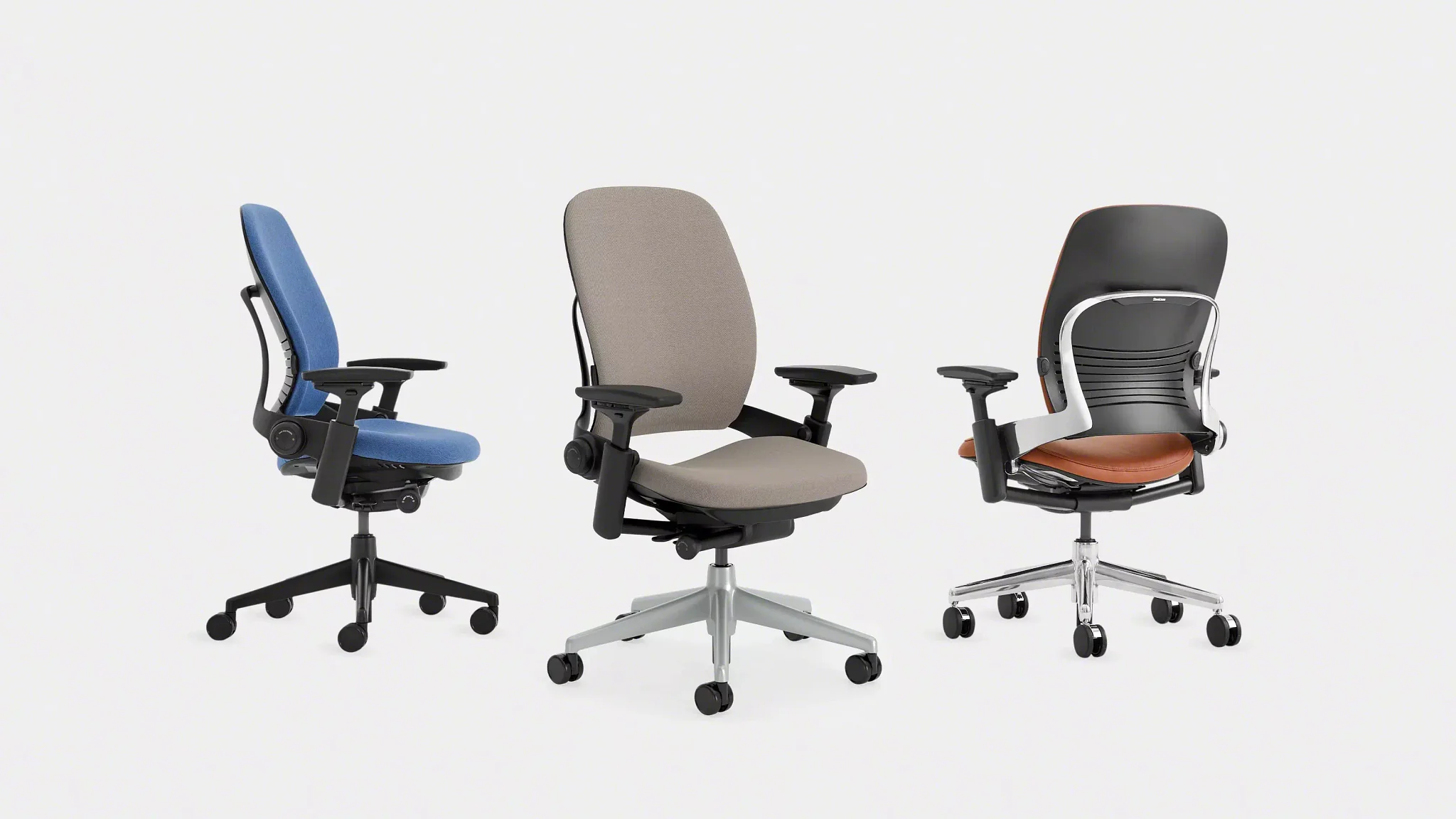
Steelcase Leap is among the most advanced ergonomic office chairs on the market. Its main strength is its ability to adapt to the individual needs of the human body, support the natural movement of the spine and ensure comfort during prolonged sitting. It is more than just a chair with a wide range of adjustable features. Leap is designed to respond actively to the user’s movements, providing the support they need without restricting their natural movement as they work.
Its ergonomics are based on an important principle: a good office chair must adapt to the person, not the person to the chair.
1. Maximum adaptability to individual needs
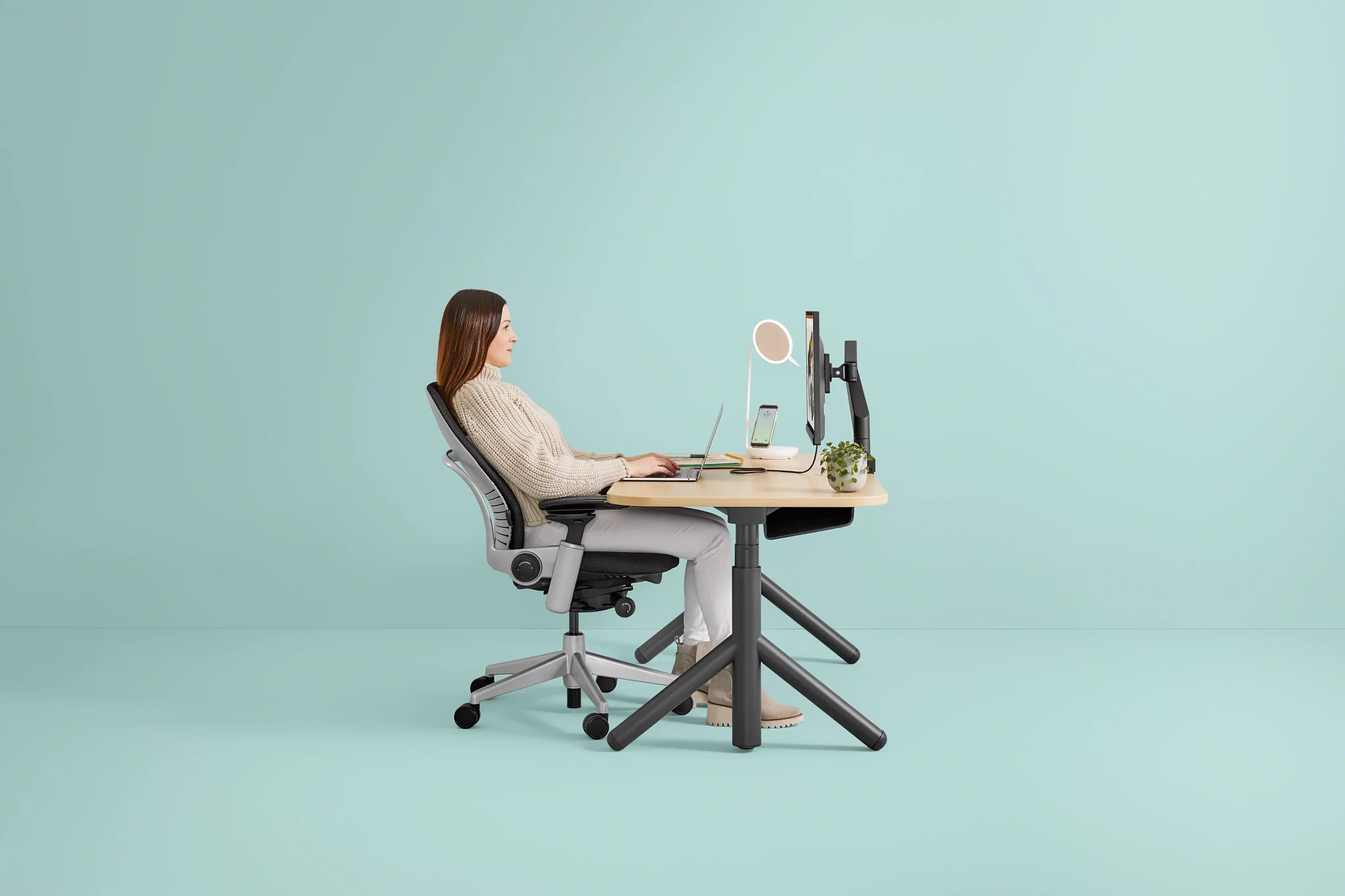
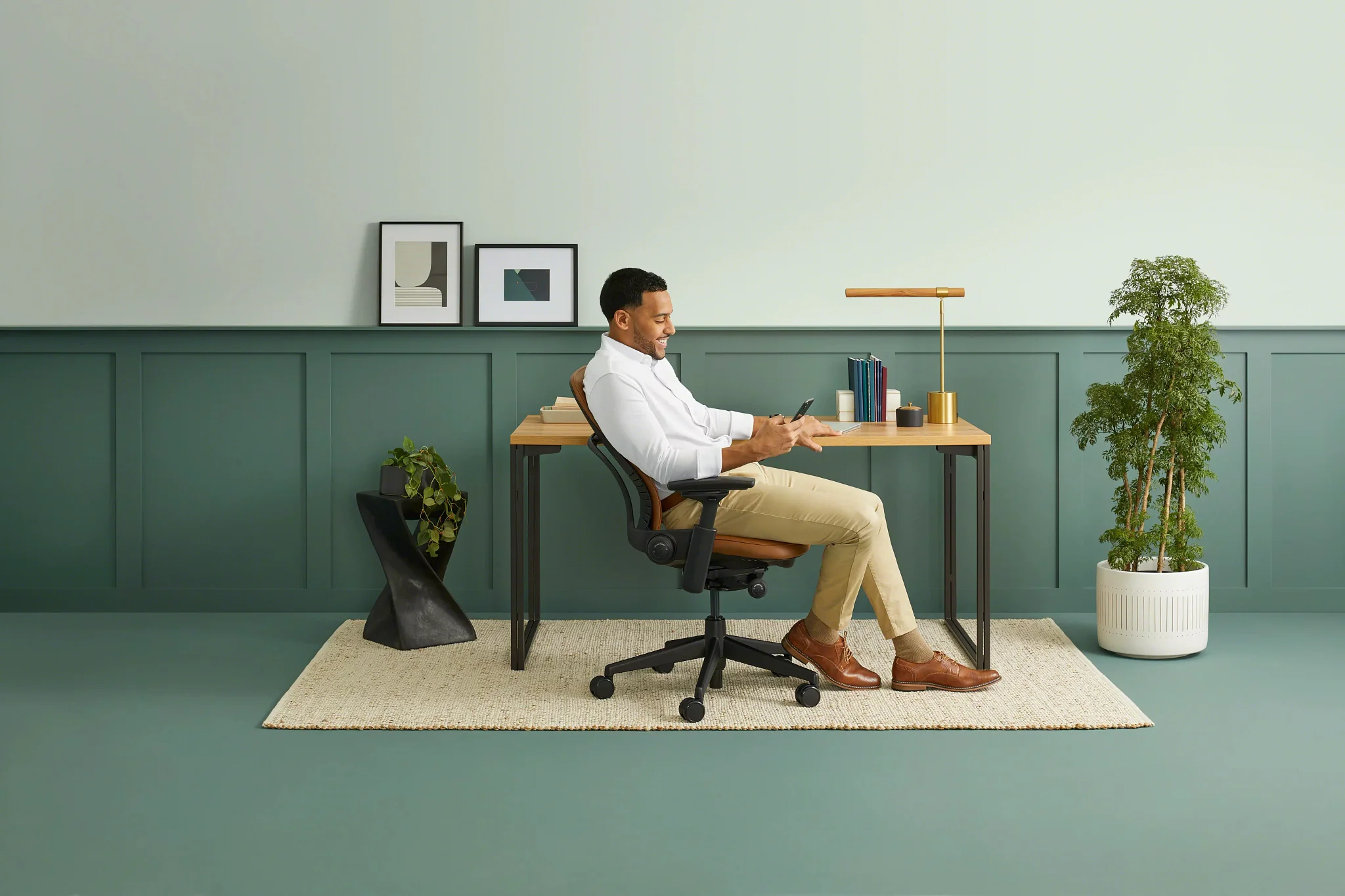
Leap allows precise adjustment in areas that have a fundamental impact on comfort and healthy sitting. It was developed with the diversity of human body shapes, proportions and working habits in mind.
The chair’s design balances three important requirements:
- Stability – the body has the support it needs while seated.
- Support – individual parts of the chair respond to the specific needs of the back and limbs.
- Freedom of movement – the user is not forced to remain in a single, rigid position.
Leap is considered one of Steelcase’s most adjustable office chairs. It offers individually tailored support, regardless of body proportions or the nature of the work being carried out.
Intuitive controls allow the chair to be adjusted to suit each user. The result is an ergonomic workstation that respects individual needs.
2. LiveBack® technology – support that follows the movement of the spine
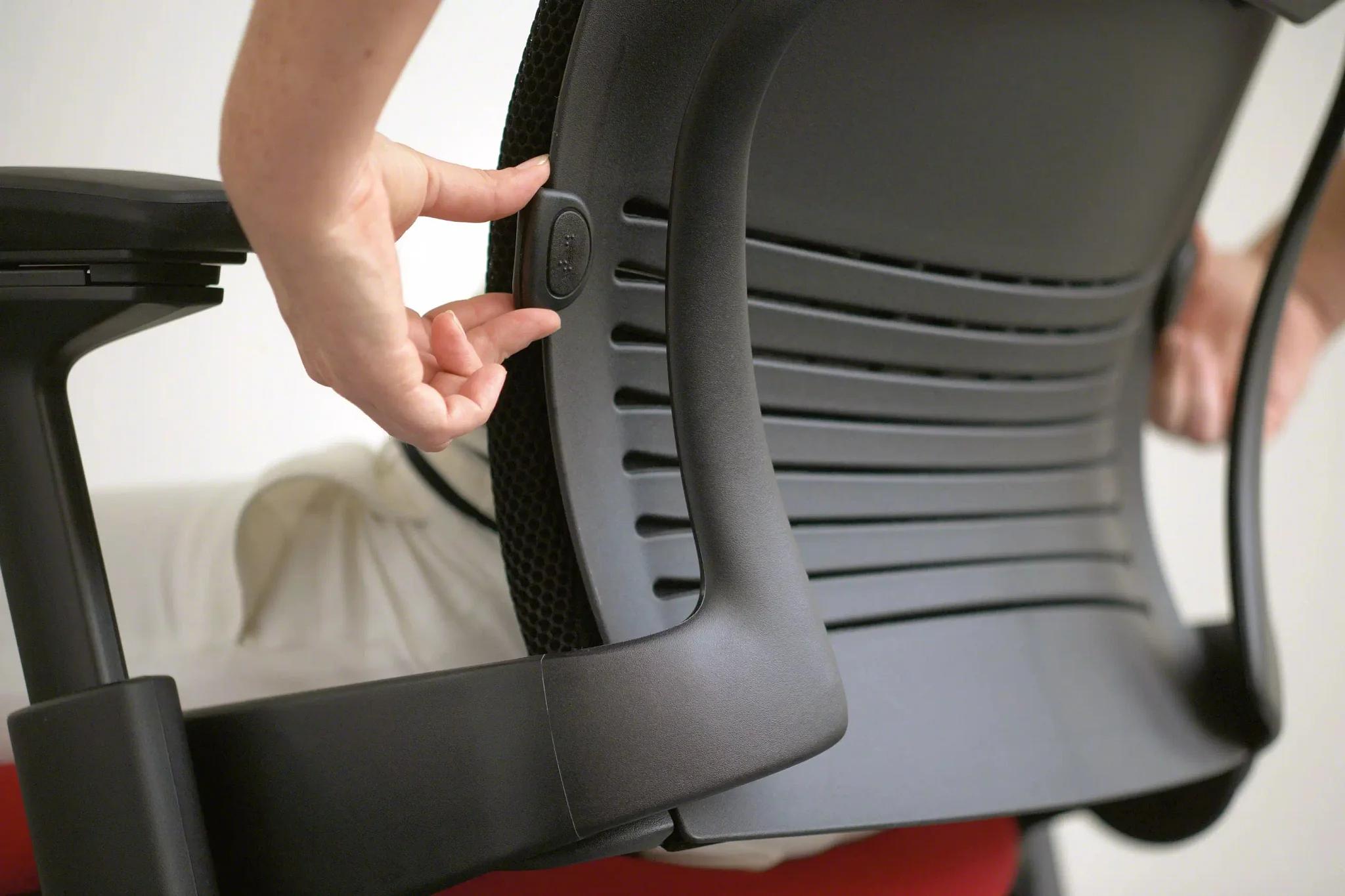
One of the Leap chair’s most significant ergonomic features is its patented LiveBack® technology. It aims to support the entire spine while allowing it to move naturally.
To understand the importance of this technology, it is essential to recognise that the human spine does not function as a single rigid unit.
When reclining, its individual sections move differently:
- The upper spine moves backwards.
- The lumbar region, on the other hand, changes its curvature and adapts to the movement of the pelvis and torso.
Spinal movement also varies from person to person. Even people of the same height, age and sex can have different movement patterns.
LiveBack® technology responds to precisely this. As the user changes position, the backrest adapts to the movement of their back, helping to maintain support throughout different seated positions.
Rather than a conventional rigid backrest that only supports the back in one position, it is a structure that actively works with the body.
3. Lumbar support – the foundation of healthy sitting
From an ergonomic perspective, the lumbar region is one of the most important parts of the back. It is subjected to considerable strain during prolonged sitting and therefore needs stable, adequate support.
Steelcase Leap is based on the principle that different parts of the back have different needs when sitting.
- The lower back needs firm, constant support to help maintain the natural curve of the lumbar spine.
- The upper back needs progressively greater support when reclining so that it can move naturally while remaining supported.
The ability to adjust lumbar support to the user’s individual needs is therefore an important aspect of ergonomics.
Correctly adjusted lumbar support helps reduce the tendency to slouch, encourages a more natural spinal position and contributes to more comfortable sitting throughout the working day.
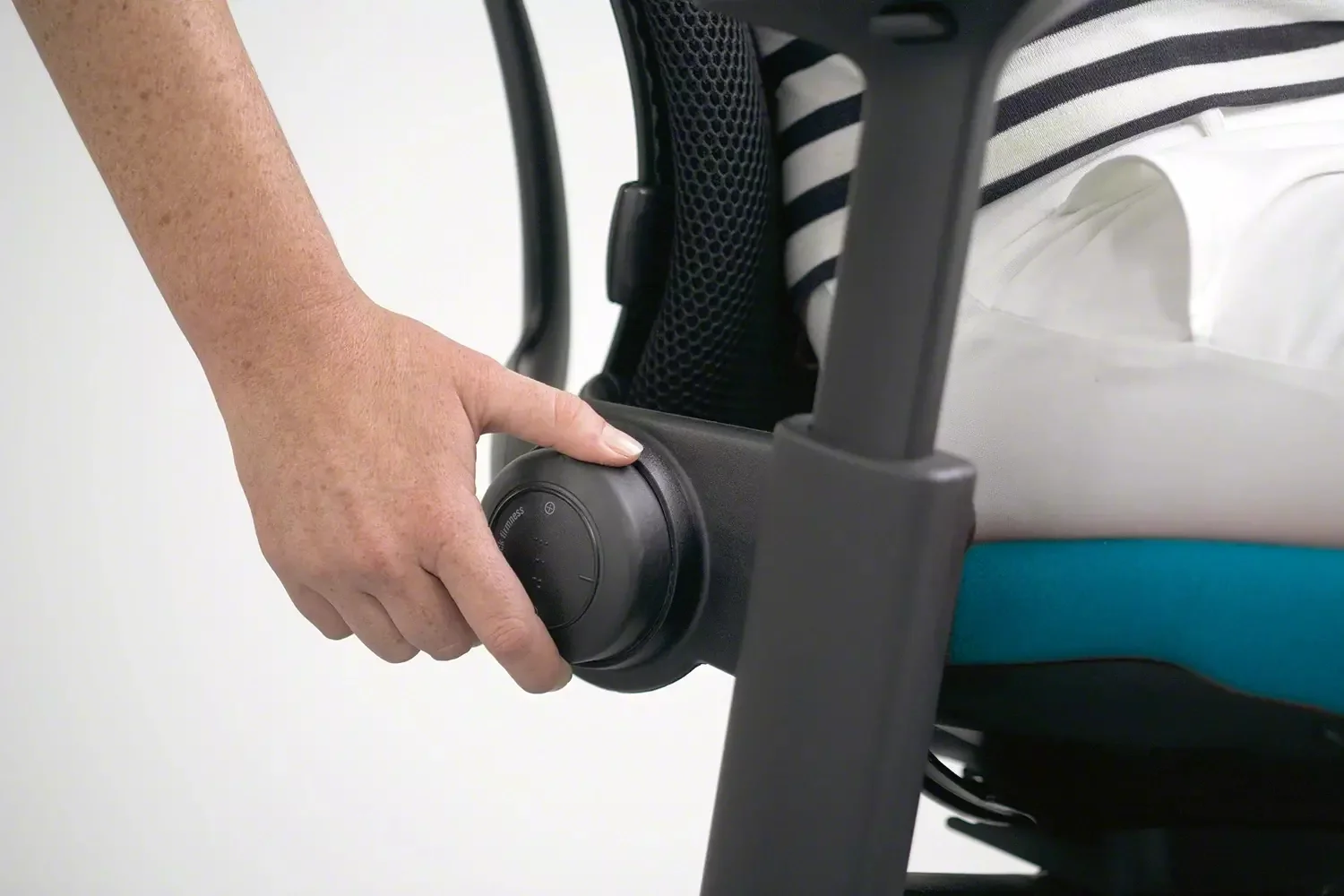
4. Natural Glide System™ – movement that keeps you connected to your work
Another significant ergonomic innovation is Natural Glide System™ technology. It addresses a common problem with traditional office chairs: when reclining, the user moves away from the desk.
With conventional chairs, leaning back can increase the distance between the user and the work surface. The user then has to stretch their arms, adjust their head position or move their eyes closer to the monitor. This can increase strain on the eyes, neck, shoulders and upper limbs.
Leap addresses this problem through the synchronised movement of the seat and backrest.
As the user reclines, the seat glides forwards while the backrest allows the back to move naturally. This keeps the user closer to the work surface, so they do not have to interrupt their work when changing position.
This mechanism offers several important benefits:
- Keeps the user closer to the desk, even when reclining.
- Reduces the need to stretch the arms unnaturally.
- Helps maintain a more suitable distance from the monitor.
- Encourages natural changes in working posture.
- Helps maintain a smooth, uninterrupted workflow.
This ability to connect body movement with work is one of the Leap chair’s most interesting features.
5. Dynamic sitting rather than a rigid posture
The ergonomics of a modern office chair should not be about keeping someone in a single, supposedly perfect position all day.
The human body is naturally designed to move. Staying in one position for long periods can lead to fatigue, muscle tension and discomfort.
Leap therefore supports dynamic sitting, allowing the user to change position naturally to suit the task at hand. The smooth movement of the backrest, its adaptation to the back and the sliding seat allow users to move between an active working posture and a more relaxed recline.
The result is greater freedom of movement without losing the support needed.
It is also important to note that dynamic sitting is no substitute for regularly standing up and moving away from the workstation. It is, however, an important element in helping to reduce repetitive strain during work.
6. Ergonomics to support work performance
A quality ergonomic chair is not just about comfort. It also has a significant influence on how people feel during the working day and how effectively they can work.
Steelcase cites the results of an independent study on health and productivity, in which one of the groups studied achieved a 17.8% increase in productivity after a year of use.
This figure points to the potential benefits of a quality ergonomic workplace. However, it is important to view it as the result of a specific study, not as a guaranteed increase in performance for every Leap chair user.
Comfortable seating, freedom to move naturally and proper body support can help reduce fatigue and improve concentration during the working day.
7. Leap Plus – ergonomics for heavier users too
For users who need a higher weight capacity, Steelcase also offers the Leap Plus model.
It retains the same core ergonomic principles, functionality and styling as the standard Leap, but its construction is designed for users weighing up to 227 kg.
Rather than a compromise, it is a variant that makes the ergonomic benefits of this range available to a wider group of users.
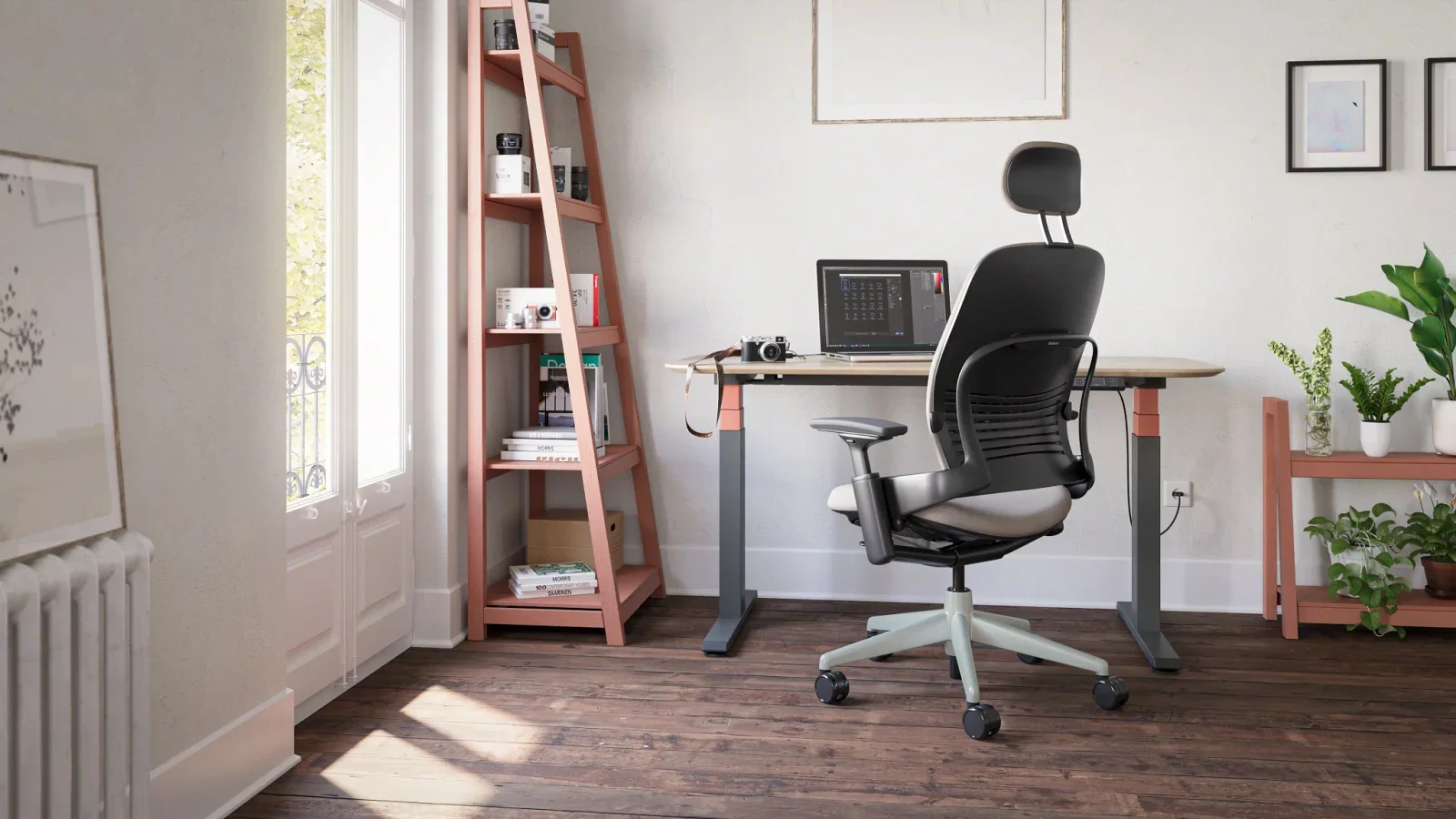
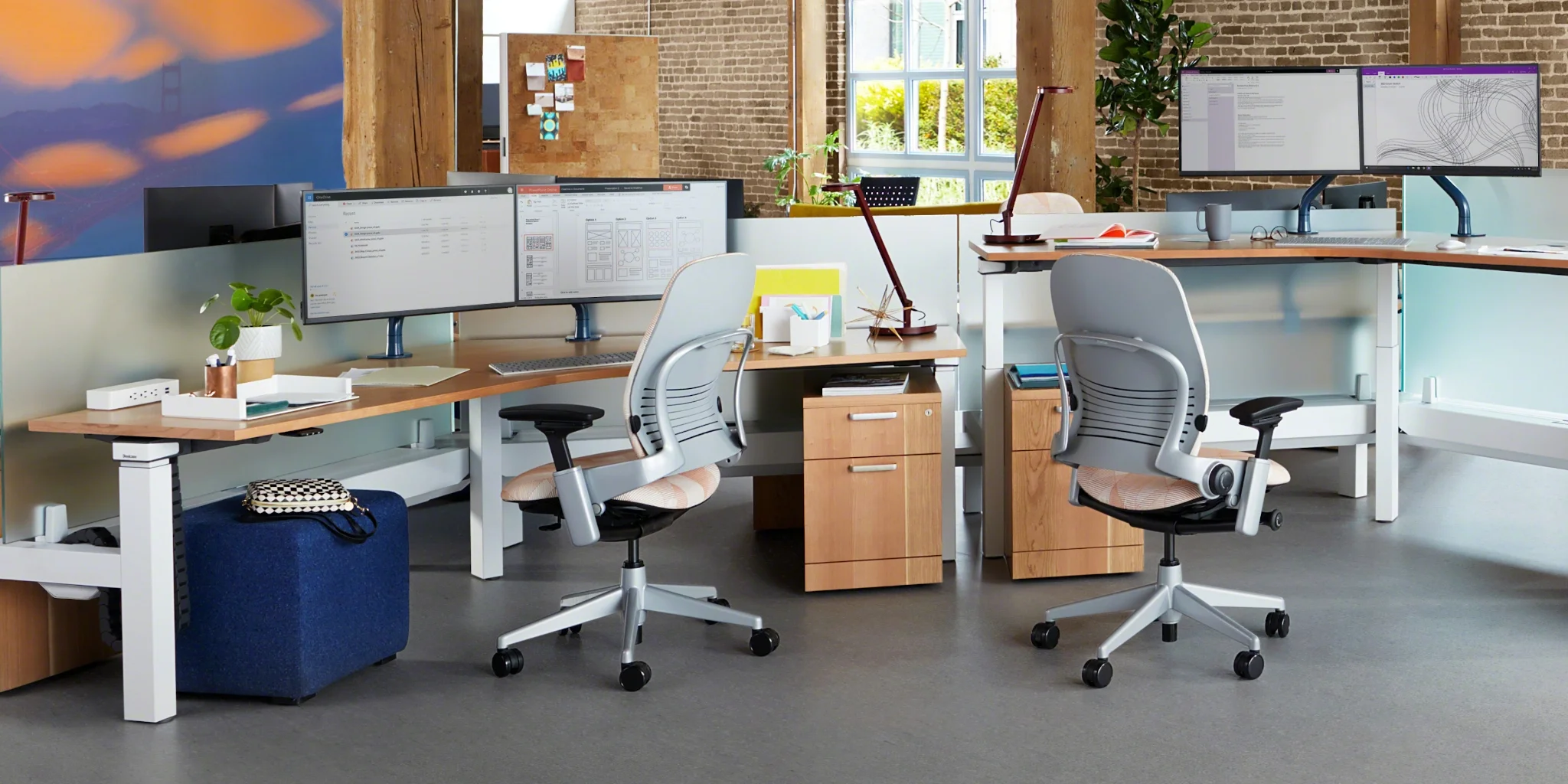
Steelcase Leap is therefore more than just an office chair that is comfortable to sit in. It is an ergonomic work tool that adapts to your body, supports its natural movement and helps create better conditions for focused work.